Our first Sunday adventure of February 2026 took us to Chatelherault Country Park on the outskirts of Hamilton. Once the grand estate of the Dukes of Hamilton, it passed into public hands in the 1970s as part of death-duty settlements. Today it’s a much-loved escape of woodland, wildlife, and winding walking routes.
The park is known for several things: its elegant Hunting Lodge, its ancient oak trees, and the striking Cadzow Cattle, recognisable by their white coats and long horns. Some of those oaks are believed to date back to the mid-1400s, making them close to six centuries old. The cattle, meanwhile, aren’t native to Scotland at all — they were brought here by the Romans and have grazed the area ever since.
Chatelherault is a maze of paths, trails and forest walks, but on this visit our goal was the Duke’s Monument, erected in 1863 in memory of William, the 11th Duke of Hamilton. To reach it, you begin by crossing the River Avon via the Duke’s Bridge, just behind the Visitor Centre. Once over, several routes lead to the monument — some short, some scenic — and we chose the right-hand path that takes you past the atmospheric remains of Cadzow Castle.
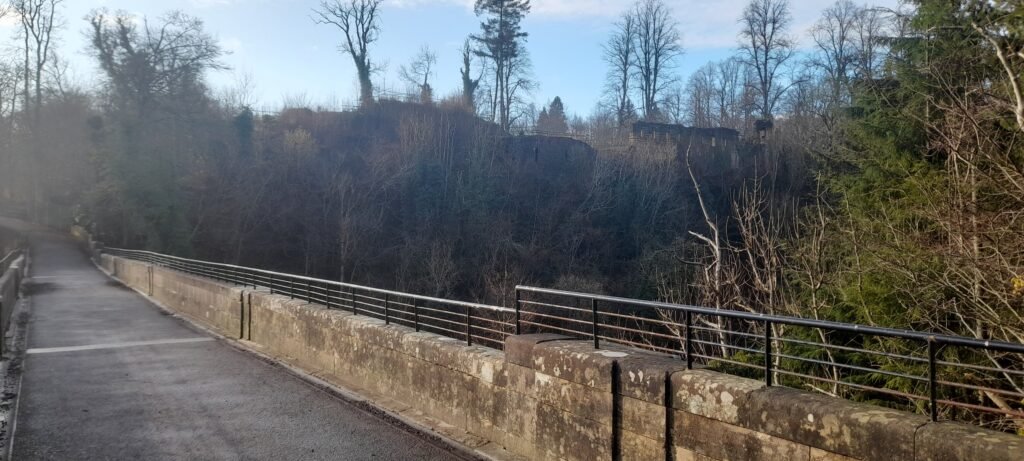
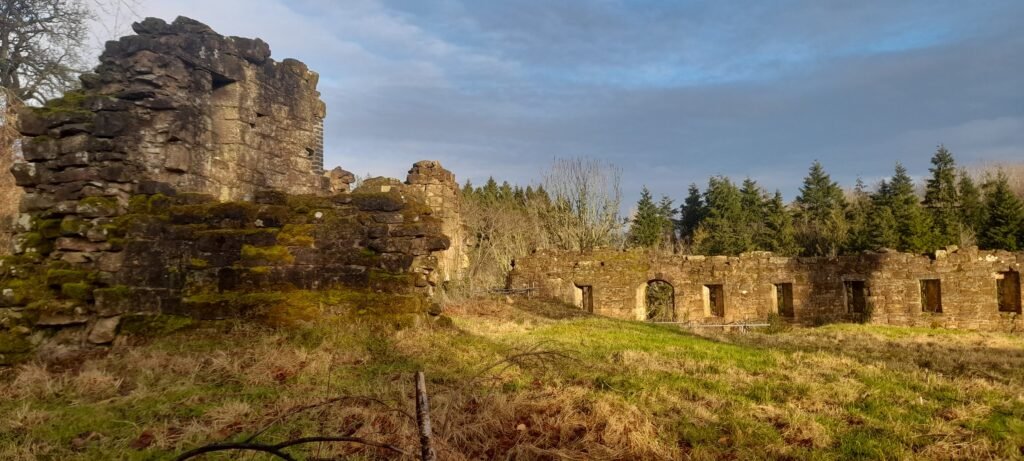
“Cadzow” was the original name of the area’s medieval settlement, only being changed to “Hamilton” in 1455 after James Hamilton, the first Lord Hamilton. The castle itself dates to the 12th century, when King David is recorded as having stayed there. Other Scottish monarchs followed, including Robert the Bruce.
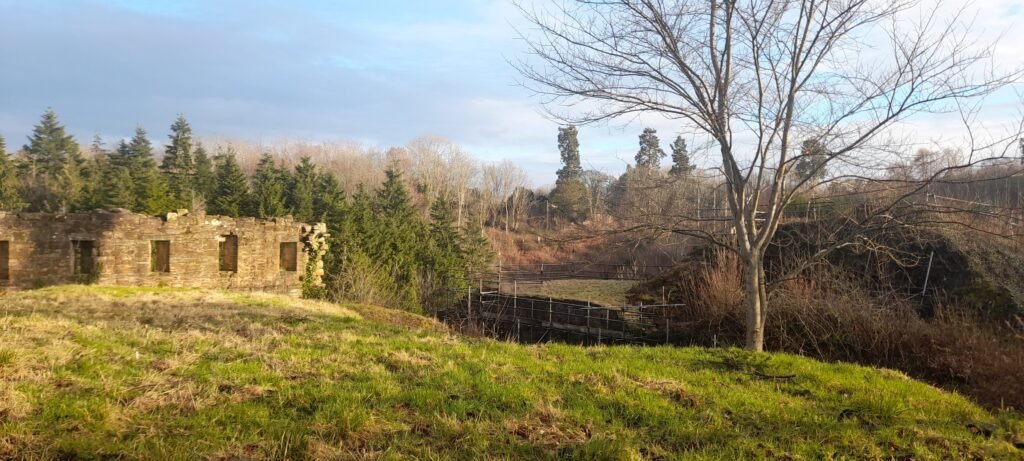
The ruins visible today are largely from 1530. At various points the castle served as a prison for those who plotted against Mary, Queen of Scots. Ironically, it is this connection to Mary that helped seal its fate — much of it was destroyed in the late 1500s. A decorative folly was added in the 1700s, but time, weather and neglect have taken their toll. It is now fenced off and inaccessible to the public.
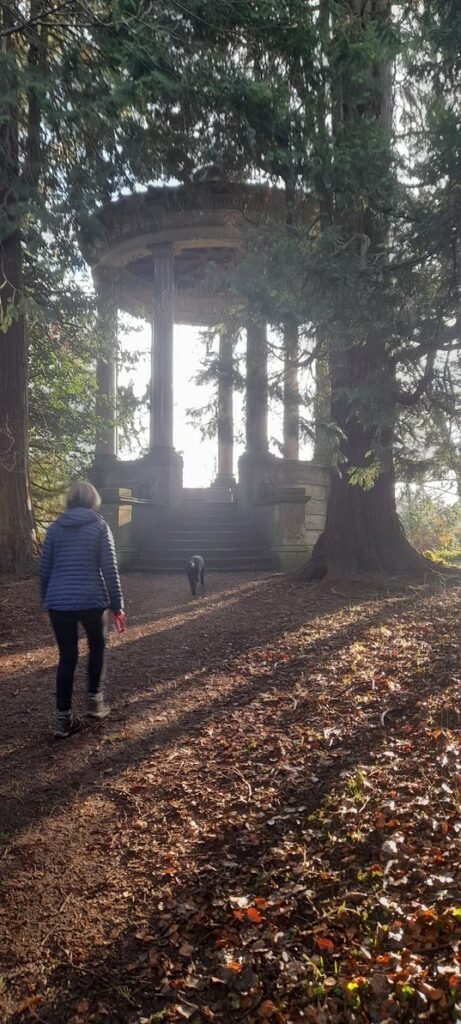
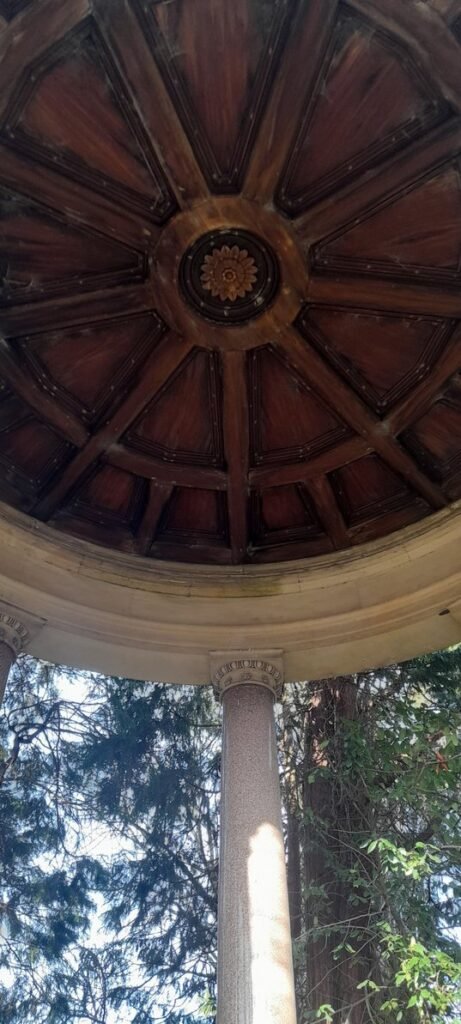
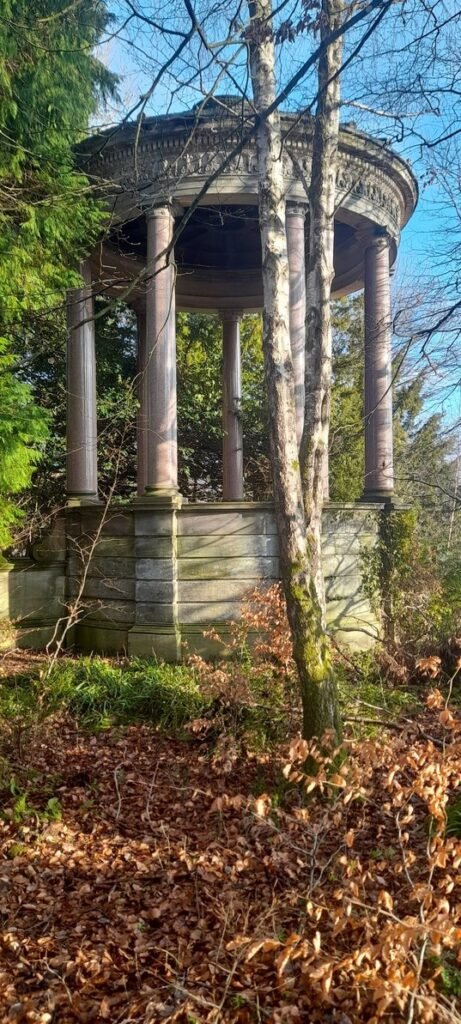
By contrast, the Duke’s Monument remains in impressive condition. Built of red sandstone, it features nine granite pillars supporting an oak roof carved with an elegant rose design. Before climbing the nine steps into its interior, visitors can spot the Hamilton coat of arms on the left and the Chatelherault crest on the right. It’s a fine, quiet spot with a real sense of presence, but a steep drop behind it down into the River Avon.
Most paths eventually lead back to the Hunting Lodge and the park’s main car parks. The lodge houses the Visitor Centre, a café, and a small museum that occasionally hosts exhibitions. It also serves as a popular wedding venue, with sweeping views towards the former site of Hamilton Palace.
Commissioned by the 5th Duke of Hamilton and designed by the celebrated architect William Adam, the lodge was affectionately (or perhaps ruefully) called “the dog kennel” by both men, as it was home to 30–40 hunting hounds at any given time.
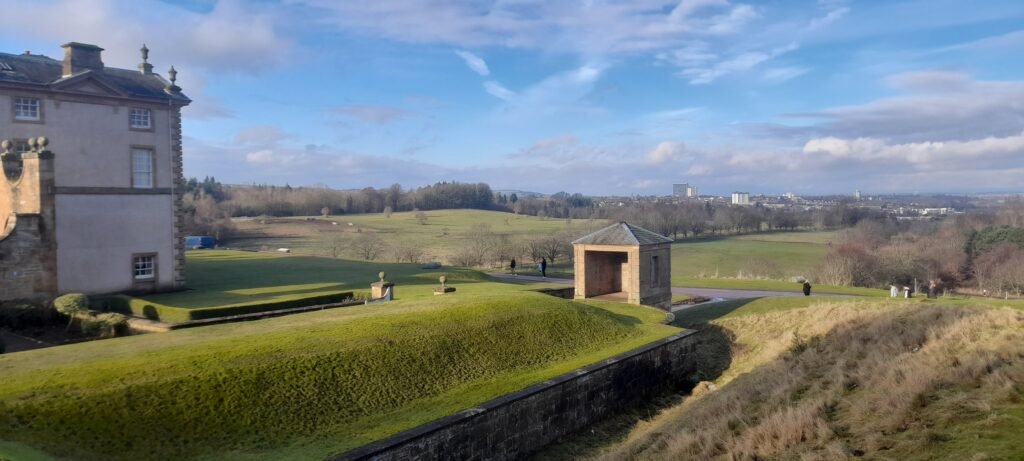
Just outside the lodge stands a small stone outbuilding, once thought to be a garden store. It was later converted into a den for the 10th Duke’s leopard, earning it the enduring nickname “the leopard house.” No one knows exactly what other wildlife lived at Chatelherault, but we do know that at nearby Hamilton Palace, the Dukes kept polar bears, wolves, and “munkies.” The palace itself was demolished in the 1930s after coal workings destabilised the ground beneath it.
Chatelherault Country Park is well worth a visit, whether you’re drawn by the history, the architecture, or simply the woods and wildlife. It’s ideal for walking, running, dog-walking, and, as we discovered, even for remote-controlled car and truck enthusiasts, who gather on Sundays to put their vehicles through their paces — and occasionally some very large puddles.