Doh! We blew it – twice!
Recently we made two trips to the outskirts of Edinburgh, right on the shores of the Firth of Forth, with the intention of walking across the causeway to Cramond Island. Unfortunately, I managed to misread the tide times on both occasions, and the causeway was underwater. Still, we enjoyed exploring the surrounding area, so the trips were far from wasted.
South Queensferry
Our first adventure began in South Queensferry, often referred to simply as Queensferry or The Ferry. Part of the old town nestles beneath the iconic Forth Railway Bridge, sitting alongside the Forth Road Bridge (opened in 1964) and the striking Queensferry Crossing (opened in 2017). Three generations of engineering all in one view.
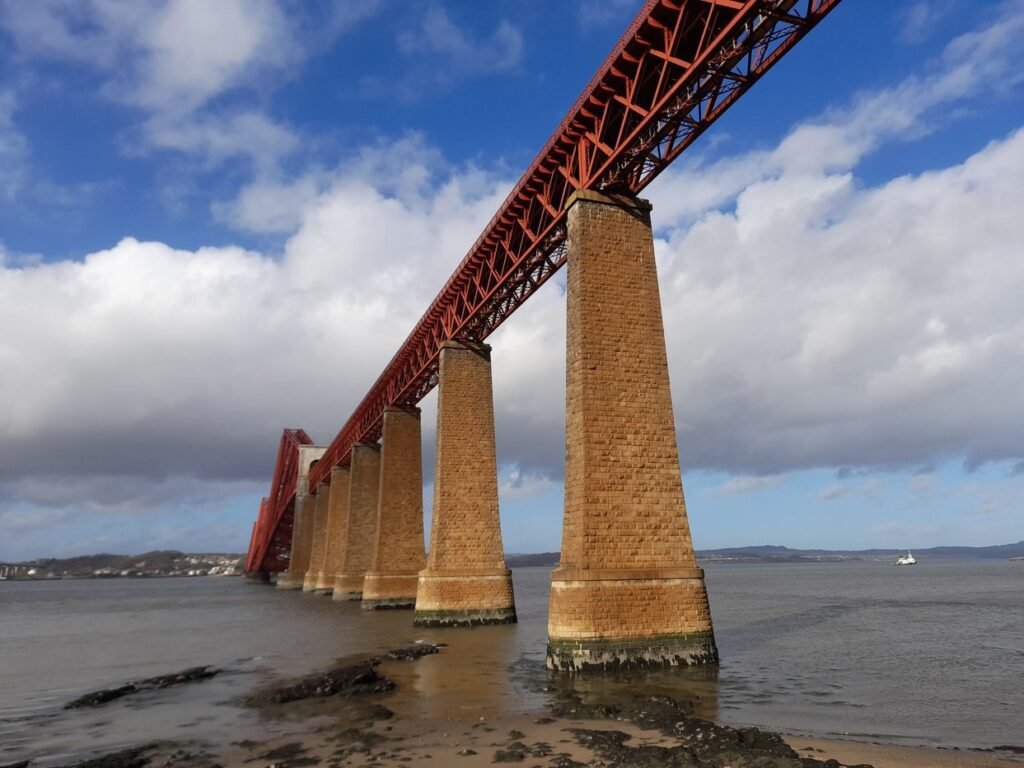
South Queensferry is also famous for the Burry Man tradition, which stretches back over 300 years. A local man is covered head‑to‑toe in sticky burrs – except his hands, feet, and eyes – and paraded through the town wearing a sash, floral bowler hat, and carrying two staffs. Some say the ritual has ancient, even pagan roots.
A more recent tradition is the Loony Dook, where brave (or mildly unhinged!) souls plunge into the icy Firth of Forth on New Year’s Day, often in fancy dress. It began in 1986 when three local men devised it as a possible hangover cure, and now it is part of Edinburgh’s Hogmanay celebrations.
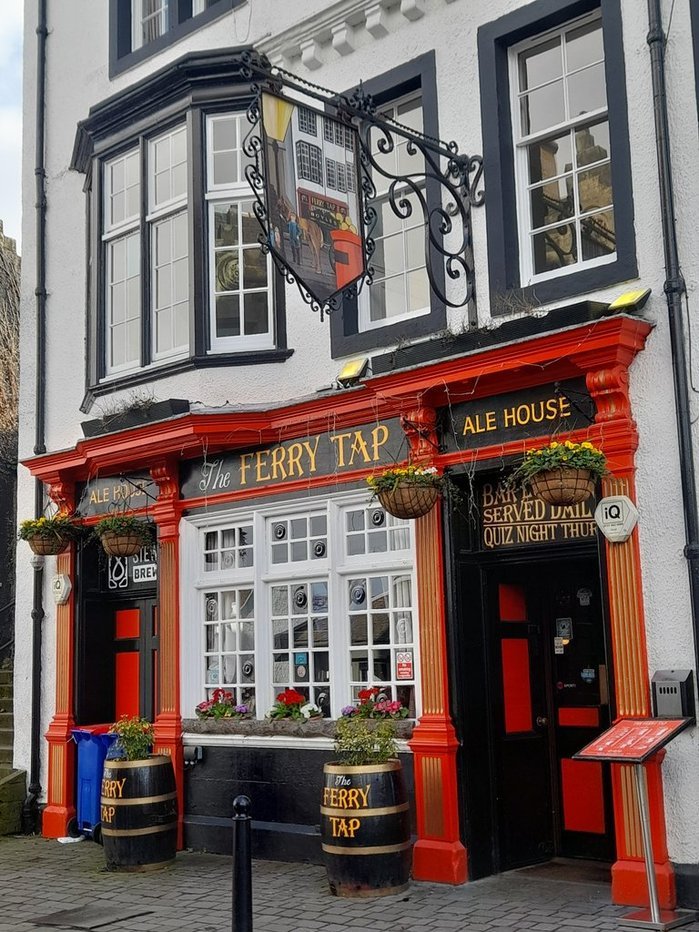
The tourist area offers a cobbled high street, quirky shops, pubs and restaurants.
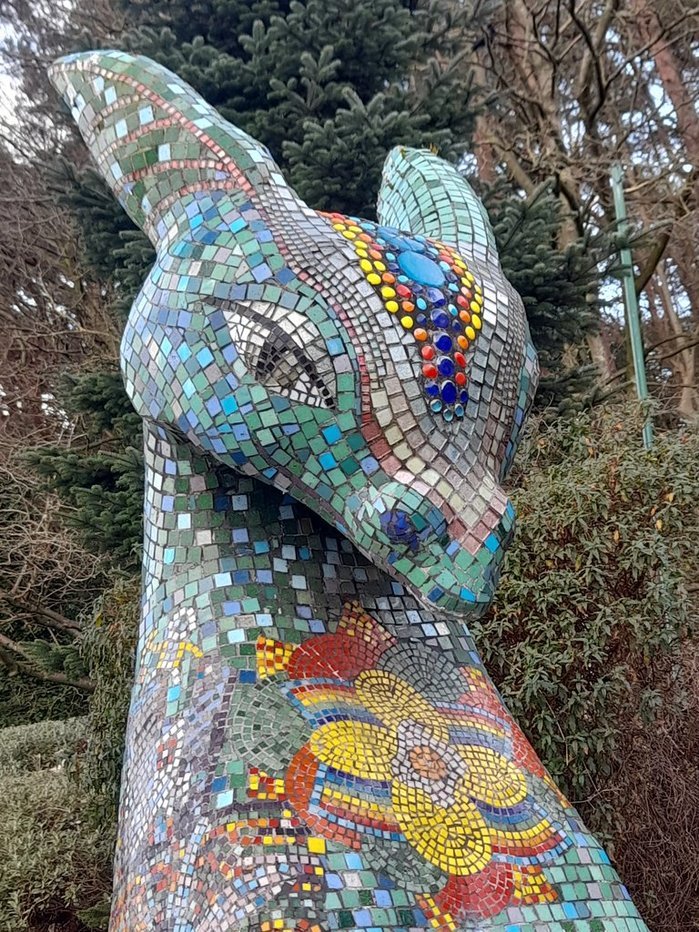
Walking along the waterfront eventually brings you to the colourful dragon-like Guardian mosaic sculpture.
Continue past the sculpture and you’ll eventually reach The Hawes Inn, made famous by Robert Louis Stevenson’s Kidnapped. Stevenson is said to have come up with the idea for the novel while staying there, and the Inn actually appears in the story.
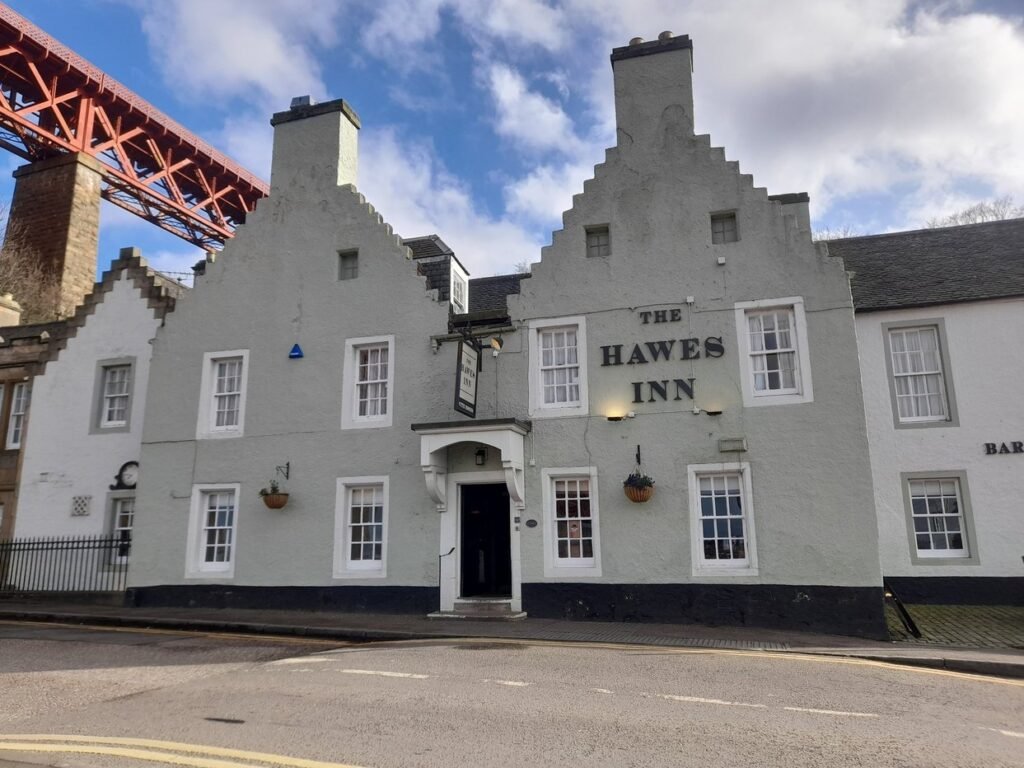
From here, the road climbs Hawes Brae toward Dalmeny and Cramond, but there is a more scenic option to reach Cramond by taking Longcraig Road, which hugs the shore of the Forth past beaches, and Barnbougle Castle, which is also available for hire, before reaching the grounds of Dalmeny House on the right. The path then swings inland to take the walker into Cramond, a long way from the old village and the harbour and the causeway to Cramond Island.
Cramond
Having failed to arrive at Cramond during low tide on our first visit, we drove straight there the second time… and still got the tide wrong! One day we’ll get it right.
But Cramond offers plenty even without reaching the island.
One walk heads inland along the River Almond, passing remnants of old mills.
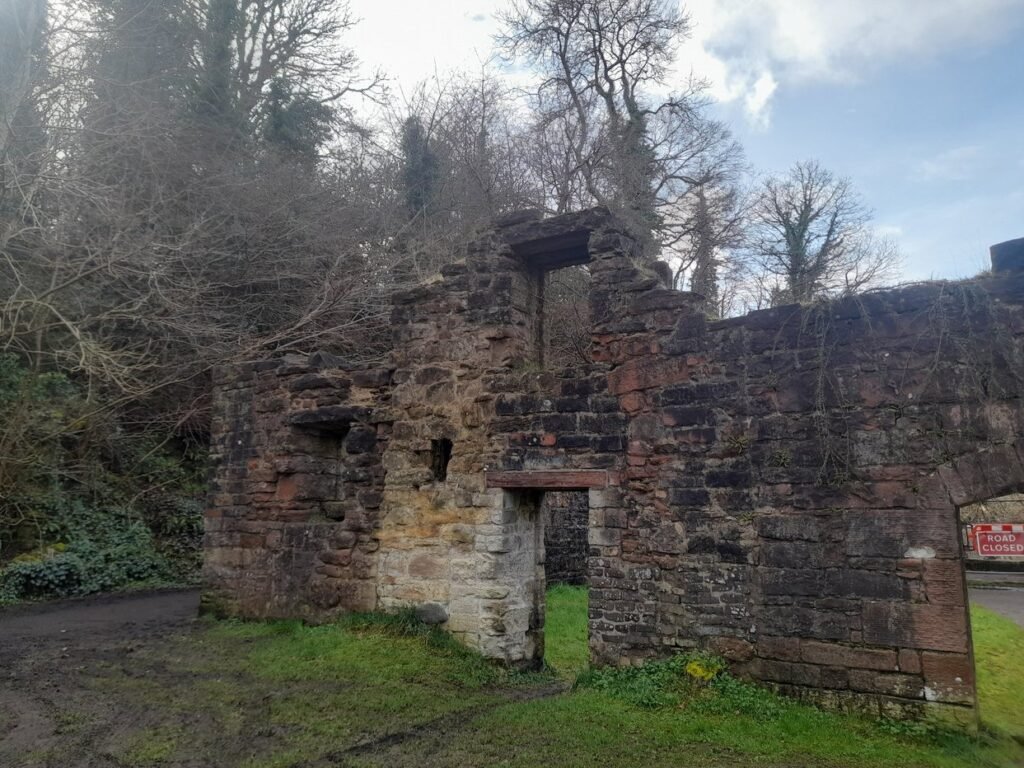
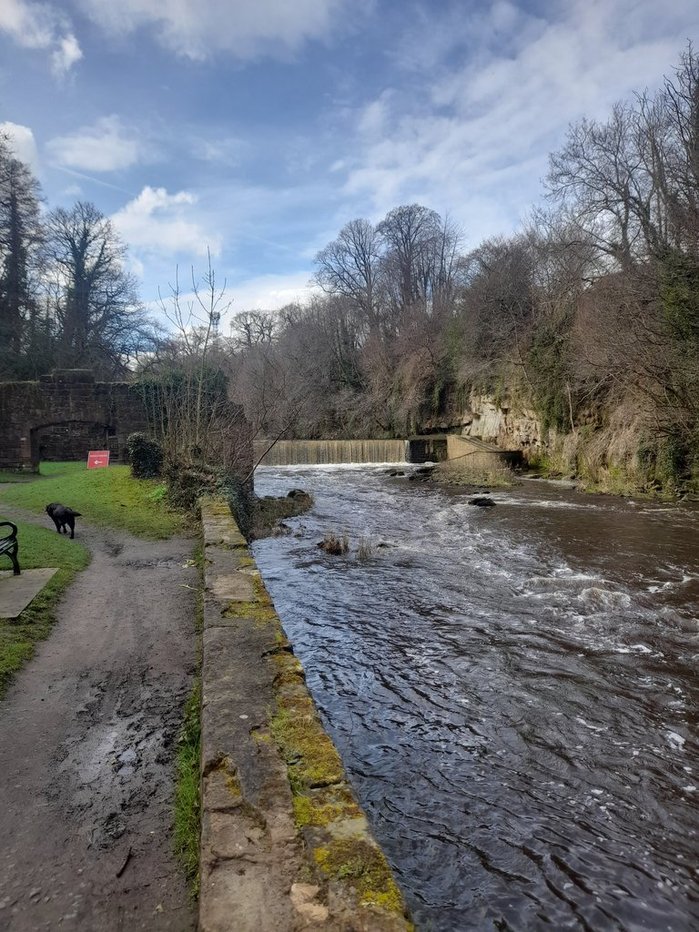
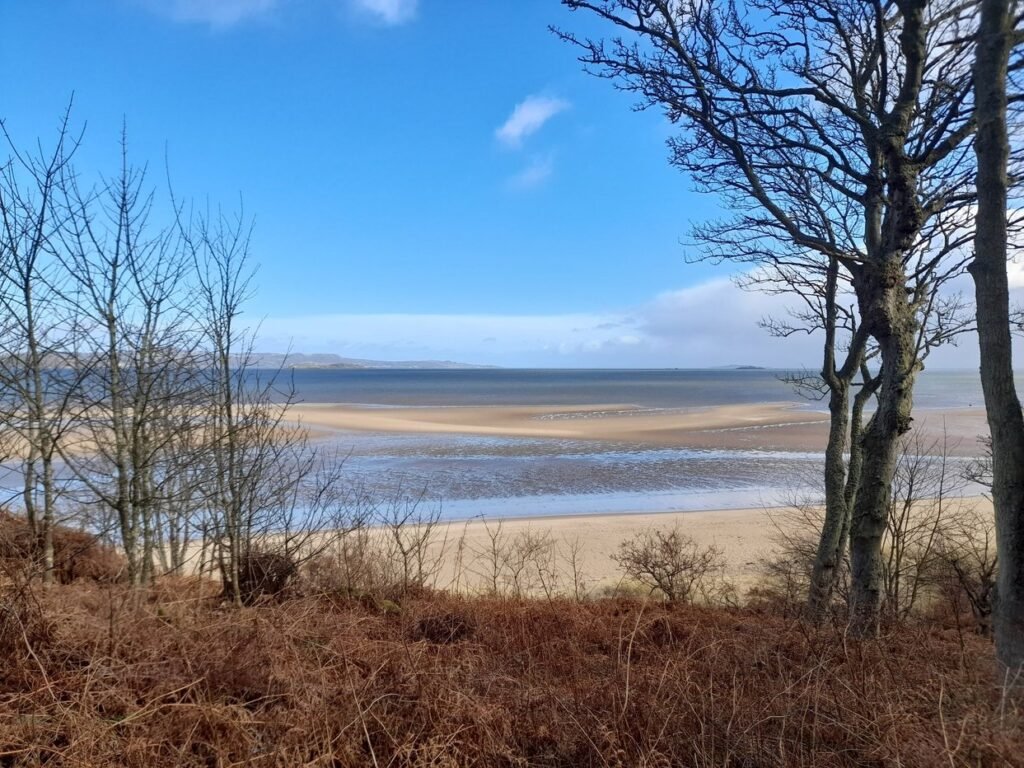
The other walk follows the coastline toward Silverknowes, offering big skies and sweeping beaches.
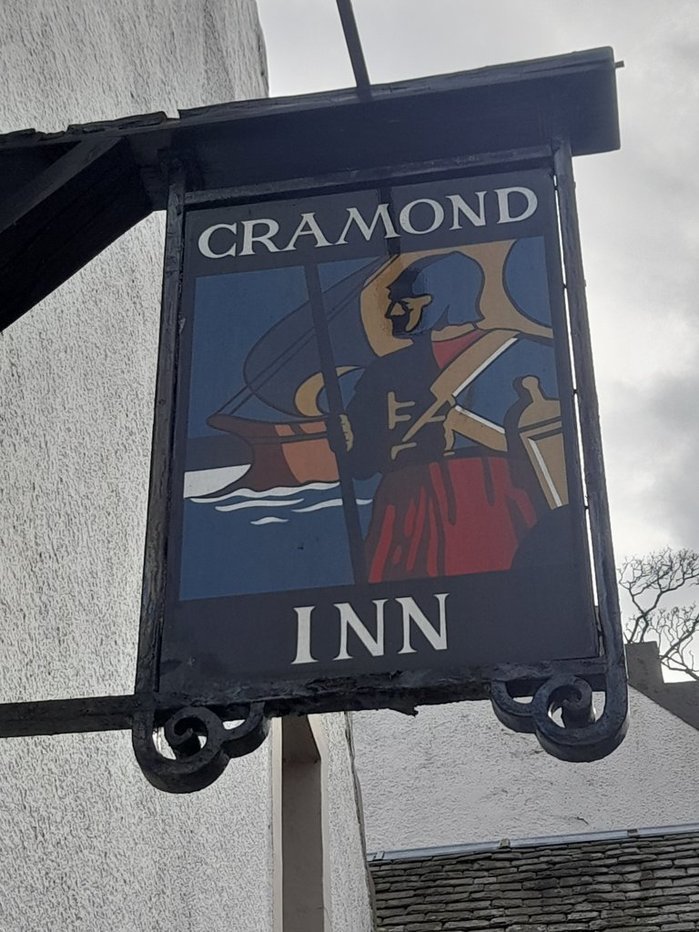
Despite a knight decorating the sign of the Cramond Inn—and a nearby street called “Templar’s Cramond”—there’s no real connection between the area and the Knights Templar, although the Knights were very active in Edinburgh in the 12th and 13th centuries. The name of Cramond actually comes from the Roman fort that once stood here: Caer Amon, meaning “fort on the river.”
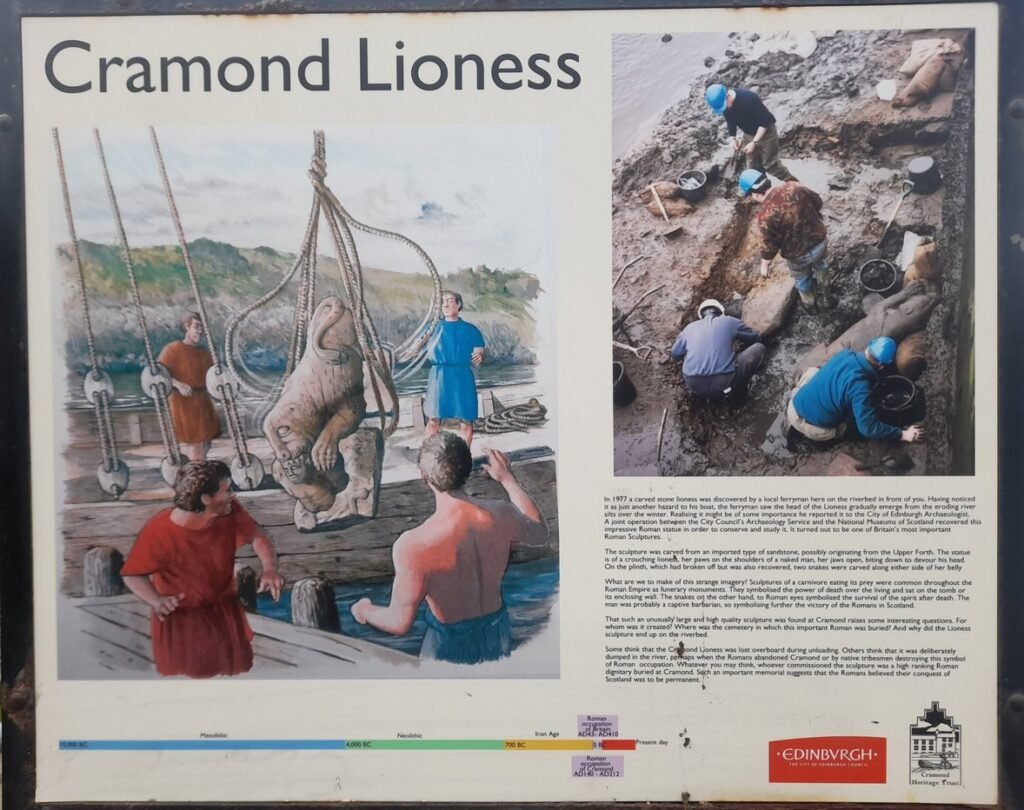
Down at the harbour, a panel commemorates the discovery of a Roman sandstone statue of a lioness devouring a man, found buried in the mud in 1997. The statue is now housed in the National Museum of Scotland.
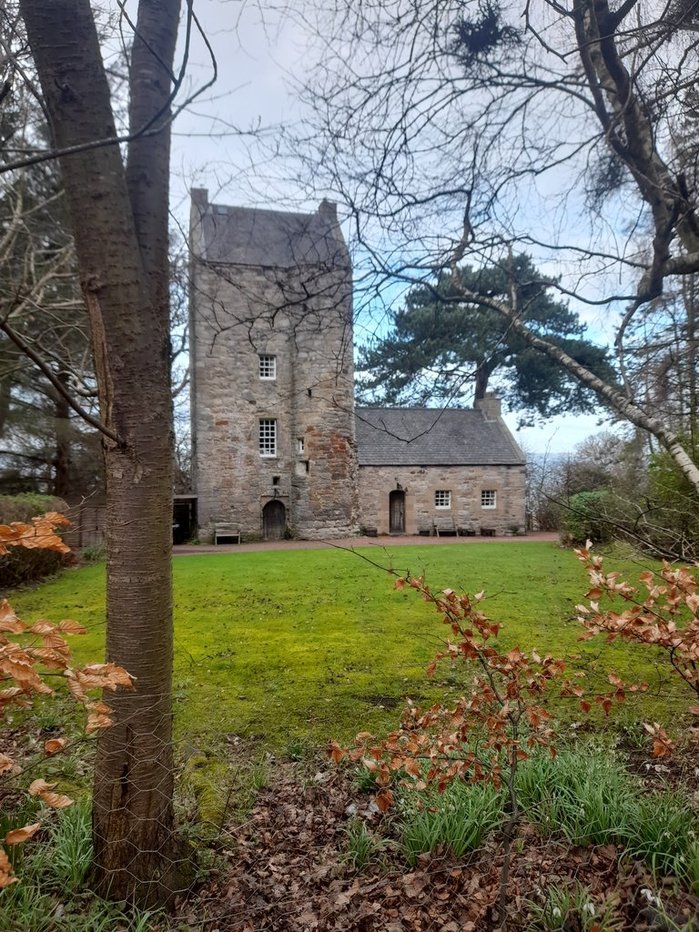
Cramond is also home to Cramond Tower, Cramond House, and of course, Cramond Island—if you time the tides correctly!
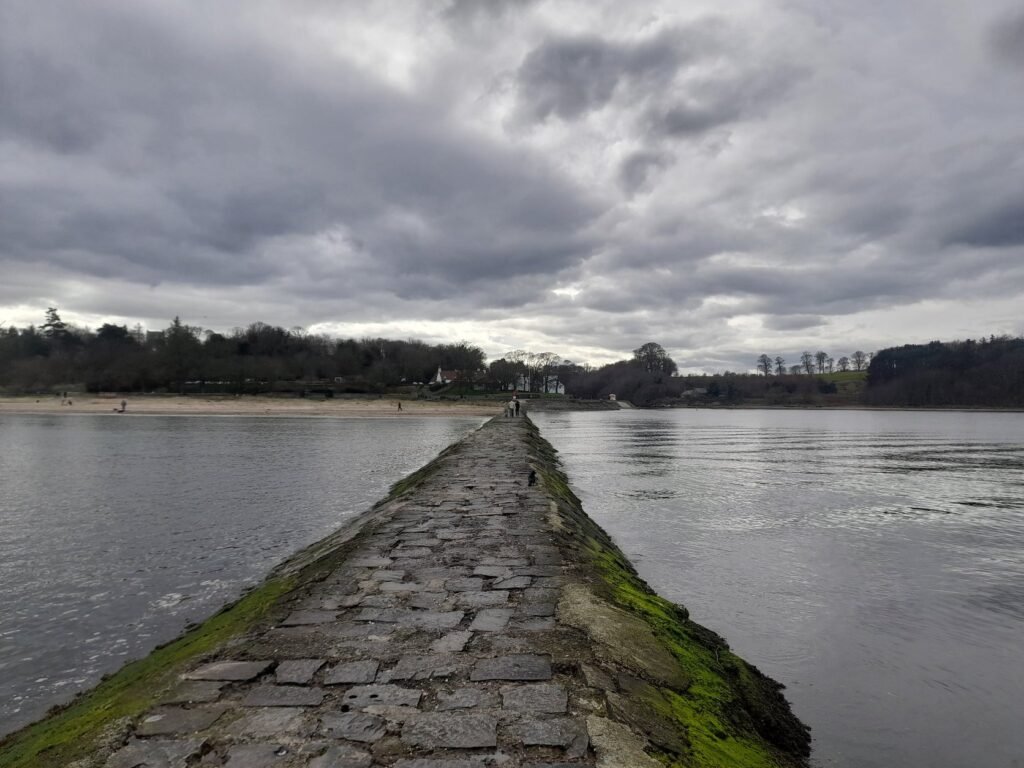
And when the tide permits, the stone causeway leads straight out across the water toward the island.
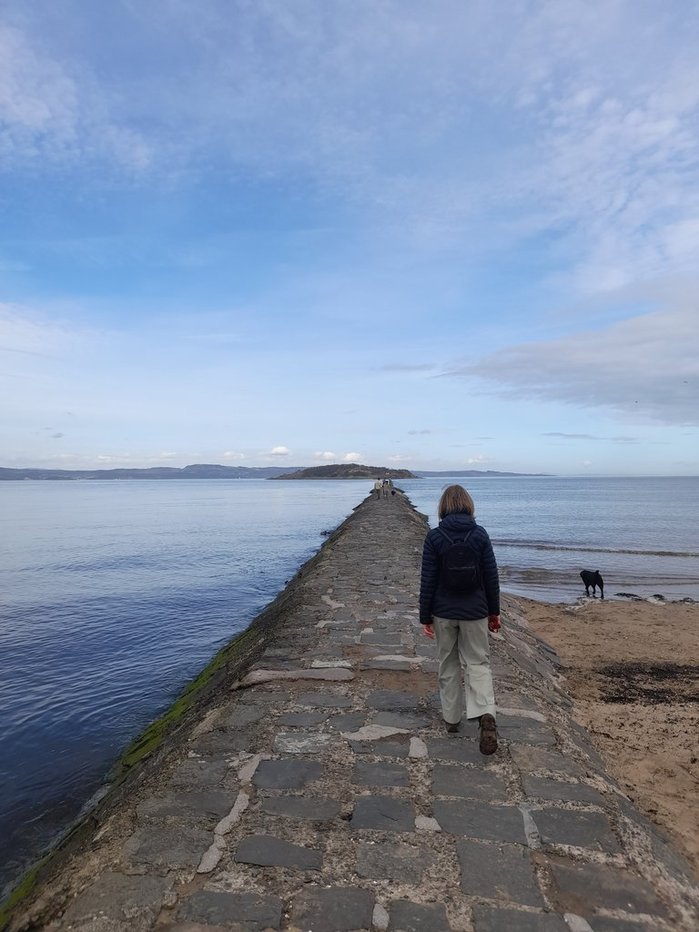
One day we will time it correctly and finally make it across to the island. Watch this space!